
International Conference on Advances in Aerospace and Navigation Systems – 2026
(ICAAN – 2026)
Conference Dates: 15-16 October 2026
Venue: Saranathan College of Engineering, Tiruchirappalli – 620012, India
ABOUT ICAAN – 2026
The conference will serve as an international platform for sharing novel approaches, developments, and technological improvements among researchers, students, developers, and practitioners. The conference invites and encourages the submission of concepts, surveys, original, unpublished state-of-the-art research, applications, industrial case studies, and in-progress research that can be categorised as regular or review papers. The conference will feature many plenary lectures and invited talks by International and National speakers on the latest topics in Aerospace and Navigation systems
ABOUT THE COLLEGE
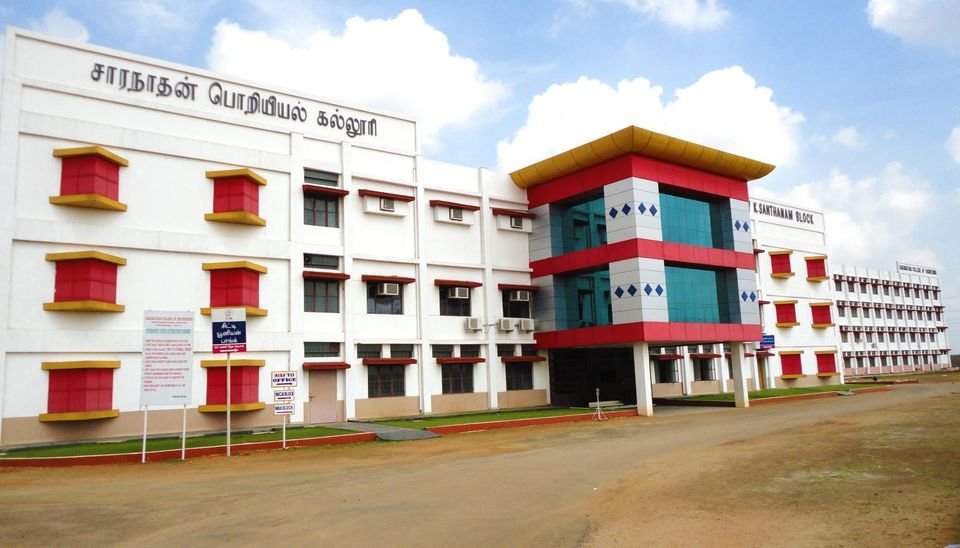
Saranathan College of Engineering is the brain-child of the great philanthropist Vidhya Seva Ratnam Sri. K. Santhanam, a charted accountant by profession. He named the college after his illustrious teacher (Guru) Prof. V. Saranathan, former Principal of National College, Trichy and an educationist par excellence of yester-years. The sprawling campus of the college is located on the Trichy-Viralimalai-Madurai National Highway (NH 45B). It offers ten Bachelor of Engineering Programmes and five Master’s of Engineering Programmes. Seven of the ten Bachelor’s programmes are accredited by National Board of Accreditation (NBA), India. In 2021 the institution has been accredited by National Assessment and Accreditation Council (NAAC), New Delhi, India with A+ grade in the first cycle itself. All departments are affiliated to Anna University, Chennai and approved by All India Council for Technical Education (AICTE), New Delhi, India. The college has a galaxy of well qualified and dedicated teaching faculty, spacious classrooms, smart lecture halls, conference halls, well-stacked library with online journals and well-equipped laboratories with advanced equipment for research and academic activities. The college is about 4 km from the Railway Junction and 12 km from the Tiruchirappalli International Airport (TRZ).
ABOUT THE DEPARTMENT
The Department of Electronics and Communication Engineering (ECE) was established in the year 1998 with an intake of 40 which was then increased to 120 in the year of 2011. In 2004, the master’s programme in Communication Systems was started. The Department is accredited by NBA. In 2013, the Department was recognized as a research Centre by Anna University. Eighteen research scholars were awarded Ph.D., and currently 20 research scholars are pursuing Ph.D., in the Department. The Department has received funds from AICTE RPS, ANRF, AICTE MODROBS, TNSCST-RFRS and TNSCST-SPS. The Department has received title winner award of Smart India Hackathon for 2020, 2021, 2022 & 2024. The Department has organized CSIR, TNSCST, AICTE, DST funded national and international seminars and conferences. Also, the Department conducted AICTE funded ATAL FDP in Communication domain during 2021, VLSI domain in 2023 and Navigation Systems domain in 2025.
Abstract Submission
Paper Submission
Paper Acceptance
Camera Ready Paper Submission
Schedule of Session
Conference Dates
Technical Tracks
Track 1: Aerodynamics and CFD (Computational Fluid Dynamics)
↠ Aerodynamic Design and Analysis
↠ Computational Fluid Dynamics (CFD) Modeling
↠ External and Internal Flow Analysis
↠ Millimeter‑wave enhancements and mitigations
↠ Turbulence Modeling and Simulation
↠ High-Speed and Hypersonic Aerodynamics
↠ Boundary Layer Flow and Transition
↠ Airfoil and Wing Design Optimization
↠ Rotorcraft and Propeller Aerodynamics
↠ Unsteady and Transient Flow Simulation
↠ Heat Transfer and Fluid–Thermal Analysis
↠ Aeroacoustics and Noise Prediction
↠ Flow Control Techniques
↠ Mesh Generation and Grid Independence Studies
↠ Multiphase and Compressible Flow Analysis
↠ CFD Applications in Aerospace Engineering
↠ Wind Tunnel Testing and Experimental Validation
↠ Aerodynamic Performance Optimization Using AI
↠ Multidisciplinary Design Optimization (MDO)
↠ Bio-inspired Aerodynamic Systems
↠ Emerging Trends in Aerodynamics and CFD
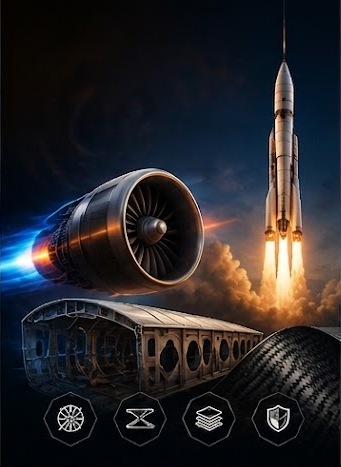
Track 2: Propulsion and Structures
↠ Aircraft and Spacecraft Propulsion Systems
↠ Jet Engine and Gas Turbine Technologies
↠ Rocket Propulsion and Launch Vehicle Systems
↠ Electric and Hybrid Propulsion Systems
↠ Green and Sustainable Propulsion Technologies
↠ Combustion and Fuel Injection Systems
↠ Propulsion Performance and Optimization
↠ Advanced Aerospace Materials
↠ Structural Design and Analysis
↠ Composite Materials and Smart Structures
↠ Structural Dynamics and Vibration Analysis
↠ Fatigue, Fracture, and Failure Analysis
↠ Thermal Stress and Structural Integrity
↠ Lightweight Structures and Manufacturing
↠ Additive Manufacturing for Aerospace Structures
↠ Structural Health Monitoring (SHM)
↠ Aeroelasticity and Fluid–Structure Interaction
↠ Finite Element Analysis (FEA) in Aerospace
↠ Spacecraft Structural Systems
↠ Emerging Trends in Propulsion and Aerospace Structures
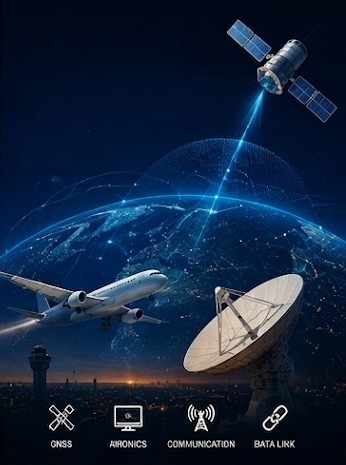
Track 3: Navigation and Communication
↠ Satellite Navigation Systems (GNSS)
↠ Aircraft Navigation and Guidance Systems
↠ Inertial Navigation Systems (INS)
↠ Autonomous Navigation Technologies
↠ Navigation Sensor Fusion
↠ Avionics and Flight Management Systems
↠ Aerospace Communication Systems
↠ Satellite Communication (SATCOM)
↠ Air Traffic Communication Technologies
↠ Wireless and Secure Aerospace Communications
↠ Radar and Surveillance Systems
↠ Remote Sensing and Earth Observation
↠ Signal Processing for Navigation and Communication
↠ Navigation Accuracy and Positioning Techniques
↠ AI-Based Navigation and Communication Systems
↠ Cybersecurity in Aerospace Communication Networks
↠ UAV Navigation and Communication Systems
↠ Space Communication Networks
↠ Next-Generation Aerospace Navigation Technologies
↠ Emerging Trends in Navigation and Communication
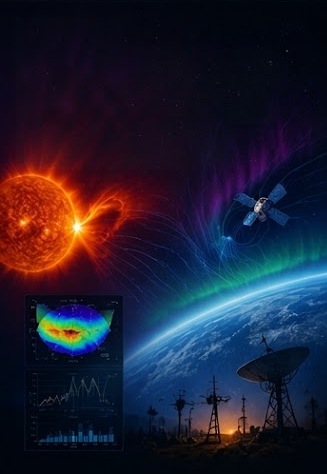
Track 4: Ionospheric Studies and Space Weather
↠ Ionospheric Physics and Dynamics
↠ Space Weather Monitoring and Forecasting
↠ Solar–Terrestrial Interactions
↠ Ionospheric Irregularities and Scintillation
↠ GNSS Signal Propagation and Ionospheric Effects
↠ Magnetosphere–Ionosphere Coupling
↠ Solar Flares and Coronal Mass Ejections (CMEs)
↠ Geomagnetic Storms and Their Impacts
↠ Space Plasma Physics
↠ Upper Atmosphere and Thermosphere Studies
↠ Remote Sensing of the Ionosphere
↠ Satellite-Based Space Weather Observations
↠ Radio Wave Propagation Through the Ionosphere
↠ AI and Machine Learning in Space Weather Prediction
↠ Space Weather Effects on Communication and Navigation Systems
↠ Space Environment and Satellite Operations
↠ Radiation Belt Dynamics and Space Hazards
↠ Ground-Based Ionospheric Monitoring Techniques
↠ Data Analytics for Ionospheric and Space Weather Research
↠ Emerging Trends in Ionospheric Studies and Space Weather
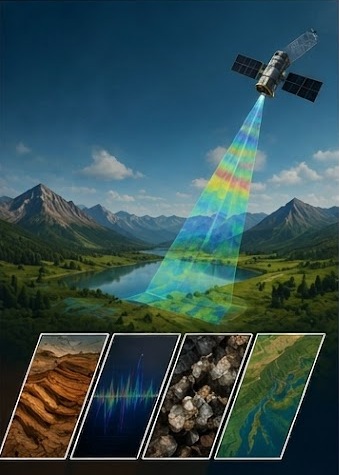
Track 5: Earth Sciences and Geology
↠ Geology and Geomorphology
↠ Remote Sensing and Geographic Information Systems (GIS)
↠ Geophysics and Geophysical Exploration
↠ Structural Geology and Tectonics
↠ Mineral Exploration and Resource Assessment
↠ Hydrogeology and Groundwater Studies
↠ Engineering Geology and Geotechnical Applications
↠ Environmental Geology and Sustainability
↠ Natural Hazards and Disaster Risk Assessment
↠ Seismology and Earthquake Studies
↠ Climate Change and Earth System Processes
↠ Coastal and Marine Geology
↠ Sedimentology and Stratigraphy
↠ Geochemistry and Isotope Studies
↠ Volcanology and Geothermal Energy
↠ Planetary Geology and Comparative Planetology
↠ AI and Data Analytics in Earth Sciences
↠ Geospatial Technologies for Earth Observation
↠ Earth Observation Satellites and Applications
↠ Emerging Trends in Earth Sciences and Geology
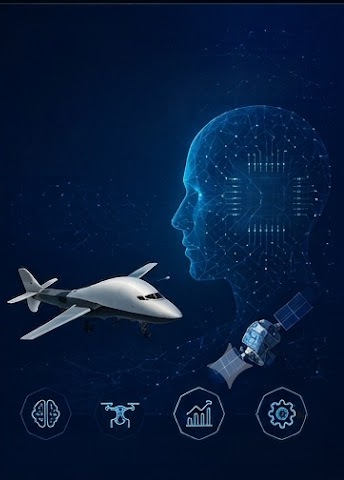
Track 6: Artificial Intelligence in Aerospace
↠ Artificial Intelligence for Aerospace Applications
↠ Machine Learning in Aerospace Systems
↠ Deep Learning for Aerospace Engineering
↠ Autonomous Aircraft and Spacecraft
↠ AI-Based Flight Control Systems
↠ Intelligent Navigation and Guidance Systems
↠ Predictive Maintenance Using AI
↠ Digital Twins for Aerospace Systems
↠ Computer Vision in Aerospace Applications
↠ AI for Satellite Data Analysis
↠ Robotics and Intelligent Aerospace Systems
↠ Reinforcement Learning for Autonomous Flight
↠ AI in Air Traffic Management
↠ Intelligent Mission Planning and Decision Support
↠ AI-Driven Aerospace Design Optimization
↠ Explainable AI (XAI) for Aerospace Safety
↠ Cybersecurity and AI in Aerospace Systems
↠ Generative AI and Large Language Models in Aerospace
↠ Human–AI Collaboration in Aviation and Space Missions
↠ Emerging Trends in Artificial Intelligence for Aerospace
Registration Fees
For Academicians
Rs. 1500
For Industralists
Rs. 2500
For Students
Rs. 800
Foreign Authors
$40
Publication Partners
Papers accepted through a rigorous peer-review process will be published in a special issue of the “Open Astronomy Journal (SCIE-indexed) and Google Scholar-indexed journals” with an additional cost. Book of Abstracts will be published with ISBN
Google Scholar-Indexed Journals (Engineering Gensis Journal and Sara Journal for Science, Engineering and Management).